 Aerial Disciplines


 Handstand
 Balance
 Balls
Balls


 Clubs
Clubs


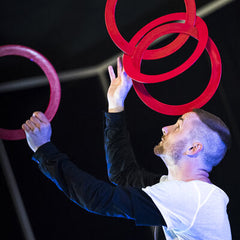 Juggling Rings
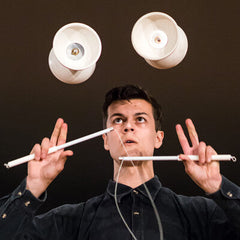 Diabolo
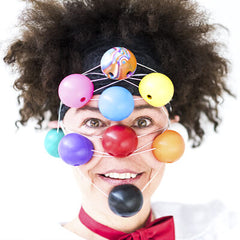 Professional Silicone Clown Noses
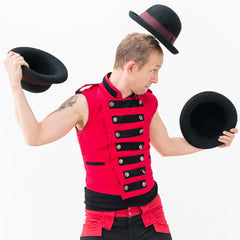 Manipulation Hats
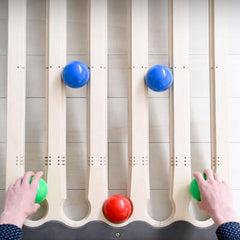 Juggle Board
 Soap Bubbles
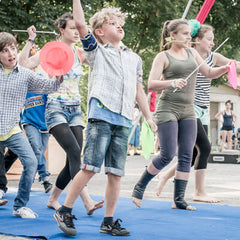 Circus Schools and Juggling courses
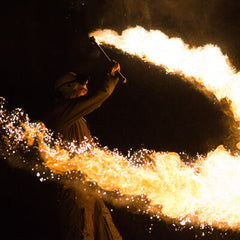 Fire Props
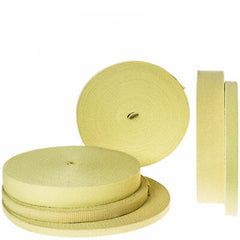 Kevlar® Wicks
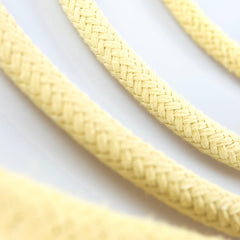 Kevlar® Ropes
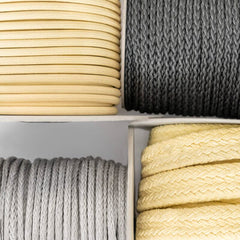 Special ropes in Technora and Kevlar®
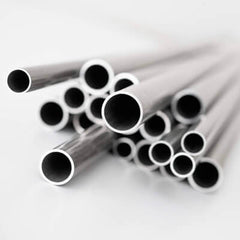 7075 - Tubing for fire prop manufacturers
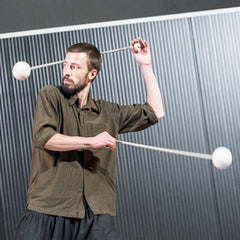 Contact Poi
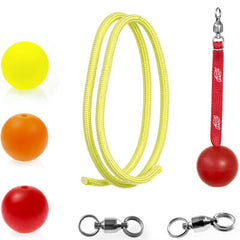 Poi and Flow Arts Components
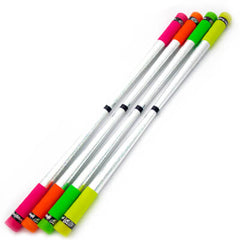 Devilstick
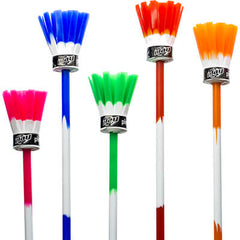 Flowerstick

How to choose Perfect Hoops
Choose tube thickness, diameter, and whether you need the tape already on. Perfect Hoops are floor hula hoops, foldable, in HDPE.
Start with four questions
Perfect Hoops are floor hula hoops, foldable, in HDPE, designed in Italy with some of the most experienced hoopers. There is no such thing as the perfect hoop: there is the one that turns at the speed you need, with the tube that forgives your gesture. A skilled friend often recommends the bare 16 mm they use today. In the first months that hoop is too fast, too slippery, and it teaches you to chase it instead of keeping it up.
- Do you work on the body (waist, chest, shoulders) or off the body (hands, isolations, throws)?
- Are you learning to keep the hoop up, or do you already keep it and want tricks?
- Which figures: waist and fitness, dance and stops, circus and multi, wedgie and fold, or hand manipulation only?
- Do you want the tape already on (Deco), or a bare tube?
Leave space around you: the hoop turns, bounces and sometimes flies. If you are starting, take a 20 mm tube, a generous diameter, and the tape: it is slower, it sits better on the waist, and it gives you time to react.
What a Perfect Hoop is
The tube is HDPE, with elastic memory: even folded for a long time, after a few minutes of hooping it returns round. The joint is curved aluminium. The button is a stainless-steel “whisker” spring: it opens in a few seconds and does not sit proud of the profile. Four things to distinguish in the catalogue, and they are not levels: they are four ways of moving.
- 20 mm tube and 16 mm tube — the classic Perfect Hoop, bare, in six colours;
- Deco 20 mm and Deco 16 mm — the same tube, UV fabric tape already on;
- the Perfect Hoop Light, 19 mm — the dimensions of a polypro, the fold of a Perfect Hoop;
- the 55 cm manipulation hoop — hand work only.
Which tube
Tube thickness decides how heavy the hoop is, how flexible it is, and how much time it leaves you to react. A thicker tube turns more slowly and forgives more: this is where you keep the waist. A thinner tube is faster and more agile, and it asks for a gesture that is already there.
| Tube | What it does | For whom |
|---|---|---|
| 20 mm HDPE | Heavier, less flexible, it answers impulses. Dynamic style, stops, slow movement. | People learning. Anyone who works on the body and wants time to react. |
| 16 mm HDPE | Lighter and more flexible. Flow, circus, multi-hooping, isolations, off-body tricks. | Anyone who already keeps the hoop up. Play does not recommend it to people starting. |
| Light 19 mm | The same dimensions as 19 mm polypro, similar weight and elasticity, but it folds without breaking. Wedgie, break, fold, juggling. | Experienced hoopers. Diameters 78–85 cm; under 78 you ask in the order note. |
| Manipulation 55 cm | 16 mm tube, about 140 g. Hands only. It does not stay on the waist. | Small isolations, throws, hoop juggling. |
In gyms the first hoop is often a heavy PE. Play does not sell it: the starting point is 20 mm HDPE, a generous diameter, tape. Bare polypro is snappier and more fragile in the cold; the Light is Play’s answer to that hand, without giving up the fold. It is not the hoop with which to learn the waist: it is the one with which, afterwards, you do the tricks a 20 mm HDPE does not want to do.
Diameter
Play sells the outside diameter: 70, 75, 80, 85, 90 and 100 cm on the 16 and 20 mm tubes. The Light runs from 78 to 85 cm. A larger hoop takes longer to turn: it forgives more, because you have time to push again before it falls. A small hoop turns fast: it is precise, and for someone learning it has already gone. Once you keep it, you go down. Professionals change size according to the trick, not because they have “moved up a level”.
The method from hoop schools — this is not a Play homologated size — is there to find the first diameter without guessing:
- stand the hoop on the floor next to you;
- see where the top edge reaches;
- to learn, it should sit 5–10 cm above the navel.
Below the navel it turns faster, and you chase it. Past the ribs it becomes bulky, and on the waist you no longer feel it. Between two sizes, for the first hoop take the larger one: afterwards, when the gesture is there, you shorten.
| Your height | First hoop, on the body | Once you already keep it up |
|---|---|---|
| Under 155 cm | 90 cm, 20 mm tube | 80–85 cm |
| 155–170 cm | 90 or 100 cm, 20 mm tube | 80–90 cm |
| 170–180 cm | 100 cm, 20 mm tube | 85–90 cm |
| Over 180 cm | 100 cm, 20 mm tube — that is the catalogue maximum | 85–90 cm |
Teachers’ tables are often in inches (36–42″ to start, 28–34″ for tricks). Play stops at 100 cm. For off-body tricks, a hoop that fits the arm length (shoulder–fingertips) is easier to isolate: in the catalogue, usually 70–85 cm or the Light 78–85. It is not the first hoop: it is the one you use when the waist is already there, and you want to work in the hand.
Style and tricks
The catalogue is not a ladder. Each combination serves a game. If you are learning the waist, the chest, the shoulders, order a Deco 20 mm at 90 or 100 cm: tape and a generous diameter. Without Deco, the same bare 20 mm tube plus TESA tape. For dance, stops, direction changes stay on 20 mm, 85–100 cm: you still want time to react. Circus, multi, isolations, off the body: 16 mm tube, 70–85 cm — it is not the first hoop. Wedgie, break, fold: Light 19 mm, 78–85 cm. Hands only: manipulation 55 cm. Any Perfect Hoop folds: add the bag if it travels often.
Tape or bare tube
UV fabric tape is essential for grip on the body. A smooth, new tube is harder to keep at one level: it slips, and you push harder, and the hoop climbs or falls. It is not an aesthetic whim. Tape gives friction, and friction gives you time to learn.
- Deco — tape already applied, twenty combinations. Start here if you work on the waist.
- Bare tube + TESA — the same result, if you want to tape it yourself.
- Bare tube — less friction. It makes sense when you already control the hoop, or on Light and 16 mm in the hand, where slip is part of the trick.
By situation
I have never kept a hoop up
A Deco 20 mm, 90 or 100 cm according to height. The tape is already on, the tube forgives, the diameter gives you time. Do not start from a bare 16 mm because “it is more pro”: it is faster, and in the first days it gets away from you.
I keep the waist, I want dance and stops
Stay on 20 mm: you still want the weight that answers the impulse. If the 100 turns slowly for you, try 90 or 85. It is not a downgrade: it is the size that turns at the speed of your gesture, now.
Isolations, multi, circus
Here the tube changes, not only the diameter. A 16 mm at 70–85 cm, or a Light if you are already fast and you want folds and wedgies. The 55 cm is for hands only: it does not stay on the waist, and it is not meant to.
I teach a mixed group
A 100 in 20 mm for people arriving, an 85–90 for anyone who already has the gesture, a 16 mm and a 55 for tricks, plus the bag. You do not need a different “school hoop”: you need different diameters of the same Perfect Hoop.
Before you put it in the cart
- 20 mm to learn or work on the body. 16 mm or Light when the tricks are already off-body, not in order to “level up”.
- First hoop: edge 5–10 cm above the navel, usually 90 or 100 cm. Between two sizes, the larger one.
- Tape in the order if the waist is still new: Deco, or TESA. A smooth tube slips, and it teaches you to chase it.
- The 55 cm is for hands only.
Guide revision: 251005