 Aerial Disciplines


 Handstand
 Balance
 Balls


 Clubs


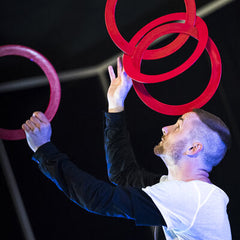 Juggling Rings
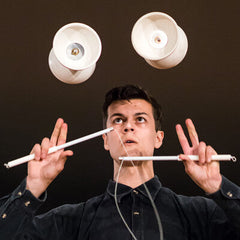 Diabolo
 Professional Silicone Clown Noses
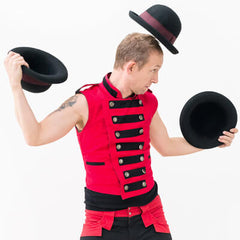 Manipulation Hats
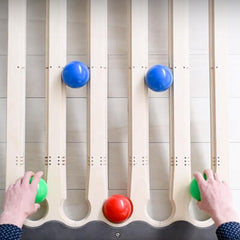 Juggle Board
 Soap Bubbles
 Circus Schools and Juggling courses
 Fire Props
 Kevlar® Wicks
 Kevlar® Ropes
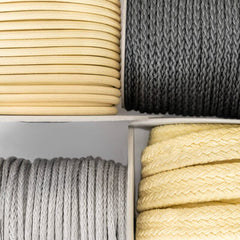 Special ropes in Technora and Kevlar®
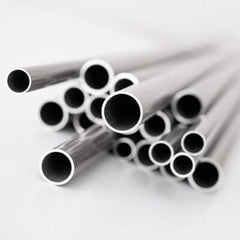 7075 - Tubing for fire prop manufacturers
 Contact Poi
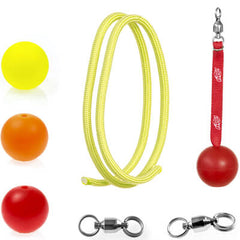 Poi and Flow Arts Components
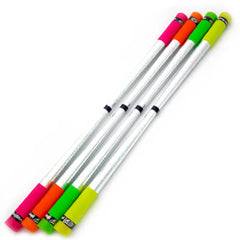 Devilstick
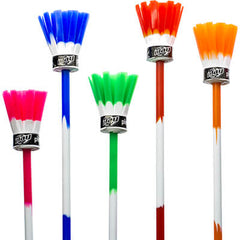 Flowerstick

How to choose 100% PURE KEVLAR® wicks and ropes
Start with four questions
Play sells 100% PURE KEVLAR®, designed and made in Italy: flat wicks, spun rope that soaks fuel, and smooth rope that must stay dry. You do not choose a “beginner Kevlar” and a “professional Kevlar”. You choose the shape and the size of the knot or wrap you are about to build. If you have not built anything yet, this page orients you on which fibre serves which prop — and on what not to soak. Fire, after that, is another conversation: it lives in the safety guidelines.
- Are you building a knotted head, a folded or wrapped wick, a leash or tubing for a sword or a double staff?
- Must the fibre soak fuel, or stay dry and resist heat only?
- Which width or diameter do specialist builders use for that prop?
- Do you need a by-the-metre cut, a 50 m roll, and sewing thread?
This page does not replace a fire course or a lesson with a teacher. Play sells Kevlar® to people who already know how to build and burn, or who work with a competent teacher. Always keep a safety person, a fire blanket and an extinguisher. Do not train alone. Extinguish before the wick goes to ember. Do not soak leashes, handles or hardware.
Why builders choose this Kevlar®
Play Kevlar® is 100% Kevlar® — not a cheaper mix of aramid and glass fibre. It is made in Italy to Play’s specs. The weave is compact on purpose: maximum soak, a firm body, edges that hold. The 3 mm and 5 mm thicknesses on the wicks mean you use less length; Play notes that 50 cm is already enough for a good torch or a fire chain, because the fibre holds the fuel instead of wasting it.
Quality is checked and held to the same standard on every metre. It is for that consistency that so many specialist fire-prop makers — workshops that spend hours on a single knot — choose this Kevlar®. They can count on the same weight, the same hand, the same sizes, and on zero surprises from one order to the next.
If you buy from remote makers it is well known that weight, consistency and sizes change from one supply to the next. For anyone building high-quality props for performers, that change changes the finished piece: a monkey fist 20 grams heavier, a wick that no longer fits the spoke, a leash that no longer passes the 6 mm handle hole. Play keeps the same weight and the same sizes on every order, so you do not have to redesign the prop each time a new batch arrives.
Wick, spun rope or smooth rope
Before you choose the shape, be clear about what that fibre is for. The head of a poi, and the wick of a torch or a staff, must soak up fuel and burn. The leash, the strap and the handle must only resist heat and stay dry. If you soak the leash as well, the fuel travels up the rope and the flame reaches toward the hand.
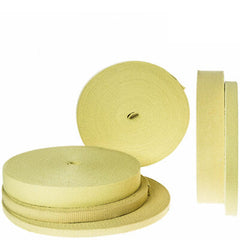
For a folded or wrapped flame — staff, dragon spoke, fire hoop, fan, torch, chain — order flat 100% Kevlar® wick, 3 or 5 mm thick. The wick has a face to fold around the hardware, and an edge that holds: it is made to be sewn, not knotted.
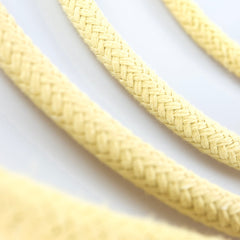
For a knotted head — monkey fist, Isis / crown sinnet, rope-dart head, long braid — order spun 100% Kevlar® rope. The fibres are open on purpose: they hold fuel. That is the wick. If the rope is smooth, it holds little fuel and the head burns weakly. Leaving it in the fuel for longer does not fix that. A head that must burn needs the spun rope.
For a leash, strap or handle that must not soak, order smooth (not spun) 100% Kevlar® rope, or Technora® if you want a fire leash with less stretch. Smooth rope is a 48-spindle braid on non-carded yarn: compact, slick, heat-resistant, and not a wick. Specialist workshops developed static Kevlar® leashes for throws and contact stalls on fire, with no chain. Keep fuel off that leash.
For a sword or a double staff, order the 36 mm Kevlar® tubing. It is made to burn, and this size is meant for those props. It fits tubes of 19 and 22 mm in diameter. The wall is 1 cm thick, so it soaks up a great deal of fuel. The price per metre is high: 1 metre of this tubing equals 6 metres of 10 mm rope.
Wick sizes
Play lists seven widths. The second number is thickness. 5 mm thickness gives more bulk and a firmer edge, with less length; 3 mm gives more surface, more face, and asks for a wrap a little longer. These are two different ways to build the flame: 5 mm gives more bulk, 3 mm gives more surface.
| Width × thickness | Typical build, in specialist workshops |
|---|---|
| 20 mm × 5 mm | Compact staff tips, hoop or dragon spokes, small torches. |
| 25 mm × 3 mm | Lighter wrap on a spoke or hoop; more surface, less bulk. |
| 25 mm × 5 mm | The compact wrap most used when you want soak and a firm edge. |
| 30 mm × 5 mm | Medium staff tips and torches that want a wider face. |
| 50 mm × 3 mm | Staff, torch or chain: Play’s “50 cm is enough” size. |
| 70 mm × 3 mm | Wide staff faces, fans, large wraps. |
| 100 mm × 3 mm | Large fans, wide staffs, ceremonial wraps. |
Workshops that wrap a staff or a dragon spoke fold the wick, hide the hardware in the fold and sew with Kevlar® thread, so a burnt stitch does not open the whole seam. They keep the metal recessed: the burn that sends a performer to hospital is almost always hot steel, not the wick. If you are building your first torch, start from 50 cm of 50 mm × 3 mm: that is the size Play points to precisely because it is enough, and it teaches the fold without a whole roll.
Spun rope sizes
Play sells five diameters of spun rope. The lengths in the table are the cuts knot workshops use for those knots. A thicker diameter makes a larger, heavier head: more rope in the hand and a wider flame. It is not the next step after 10 mm. Start from the diameter of the knot you are learning to make.
| Diameter | Typical knot or braid | How much they cut |
|---|---|---|
| 6 mm | Long braids: fire sword, Thai staff, slim wicks. | About 10–15 m for a sword. |
| 10 mm | The default size for monkey fist and Isis poi heads. | About 6 m for a pair of 4-pass monkey fists; about 9 m for a pair of Isis heads. Workshops often weigh this size at about 37 g per metre. |
| 13 mm | Larger monkey fists, Isis staff heads, rope dart and meteor. | More rope per head; the extra diameter is the point. |
| 17 mm | Heavy heads and large custom knots. | You cut to the knot, not to a catalogue pair. |
| 25 mm | Very large props and thick braided cores. | You cut to the knot. |
The monkey fist is a round knot. A 4-pass fist on 10 mm is the size most people use for poi: it sits in the hand, the flame stays regular, and about 6 m for a pair is enough to learn the knot. Isis (crown sinnet) is a knot that is taller than it is wide, so the flame comes out longer. You make both knots with the same 10 mm rope. What changes is the knot, not the type of fibre.
Smooth rope, Technora® and handles
Play smooth rope exists in 4 mm and 10 mm. Play means 4 mm for poi handles — they pass the hole, they stay dry, they hold the hand — and 10 mm as a leash for contact fire poi, where you want little hardware and no chain. Anyone who drills a hole in fire handles usually keeps it around 6 mm (¼ inch): 4 mm Kevlar® or 6 mm Technora® will pass; 8 mm Technora® and 10 mm leash will not, if the handle is not made for that. Before you order the leash, measure the hole: it is the detail that stops a wrong order.
Aramid ends do not melt. Close them with 100% Kevlar® sewing thread (0.5 mm / 2000 denier, or 1.25 mm / 9000 denier). Tie a knot at every stitch, so a burnt loop does not open the whole job.
By the metre or 50 m roll
By the metre makes sense if you are making a pair, a staff, or trying a knot: you are not left with a roll you will not use. A 50 m wick roll or a 50 m rope roll makes sense if you have a workshop, or if you already repeat the same size: the point is that 10 mm stays 10 mm, from one prop to the next. Add thread if you sew folds or close ends. Add the 36 mm tubing if you are covering a 19 or 22 mm tube for a sword or a double staff.
A size that is not on the list
Play can make virtually any rope or wick. The catalogue is the stock builders already repeat, not the limit of the loom. We are happy to receive ideas and requests for new widths, thicknesses and diameters.
Supporting the creativity of the many small and large fire-prop makers is our mission. Minimum production quantities are not prohibitive at all. Write to sales@playjuggling.com and ask. There is no need to be afraid.
By situation
First pair of knotted poi
10 mm spun rope: a 4-pass monkey fist (about 6 m per pair) if you want a round head that sits in the hand; Isis (about 9 m) if you want the taller flame. Leash: smooth 4 mm or Technora® 6 mm, and do not soak it. Do not start from a 17 or a 25 mm “because it shows more”: it is more mass, more knot, more prop than the one you are learning to build.
Staff, dragon, hoop, fan
Flat wick: 20–30 mm × 5 mm for compact tips; 50–100 mm × 3 mm for a wide face. Fold, sew, hide the metal. 50 cm of Play is enough for a torch or a chain, not for a whole staff: there the length is decided by the spoke, not by the catalogue.
Sword or long braid
6 mm spun rope, about 10–15 m for a sword. The slim diameter is the point: a long braid on 10 mm becomes an object too thick to lead.
Contact fire, throws and stalls
Spun on the head, smooth 10 mm on the leash if you want little hardware. Fuel stays on the head only. If you soak the leash, the flame does not get bigger: the fuel travels up the rope and reaches toward the hand.
You already build for performers
Reorder the same Play size. A 50 m roll if that size is your standard: the point is that 10 mm stays 10 mm.
Before you put it in the cart
- You know whether the fibre must soak or stay dry. That is the first question, not a detail.
- Width or diameter matches the knot or the wrap, not a guess that “it shows more”.
- Handle holes are around 6 mm, unless the handles are larger. Measure them first.
- Leashes, knobs and hardware will not go in the soak.
- Thread is in the order if you sew or close ends: aramid does not melt.
- If the size you need is not there, write to Play: made-to-order runs are welcome and the minimums are not prohibitive.
- At the first lighting there will be a safety person, a blanket and an extinguisher. The rest lives in the guidelines.
Guide revision: 251004